
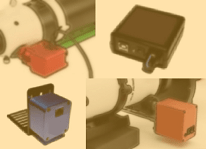
Why is an external controller like the Armadillo, Platypus, Tarsier or Limpet better than an “all in one” (focuser with embedded motor and cables)?
The offer of controllers to automate the focusers has expanded considerably in recent times with new models that have appeared on the market. Manufacturers as diverse as ZWO, PegasusAstro or Primaluce offer their controllers with different functionalities and options.
Given this new offer, from Lunático Astronomía, we want to explain why our Seletek controllers (Armadillo, Platypus, Tarsier and Limpet) continue to be the best option to automate the focuser.
1) Experience, reliability and stability.
New focusers have emerged in recent times. Seletek was launched in 2008 and since then more than 1.000ud have been sold of its different versions (Armadillo, Platypus, Tarsier and Limpet).
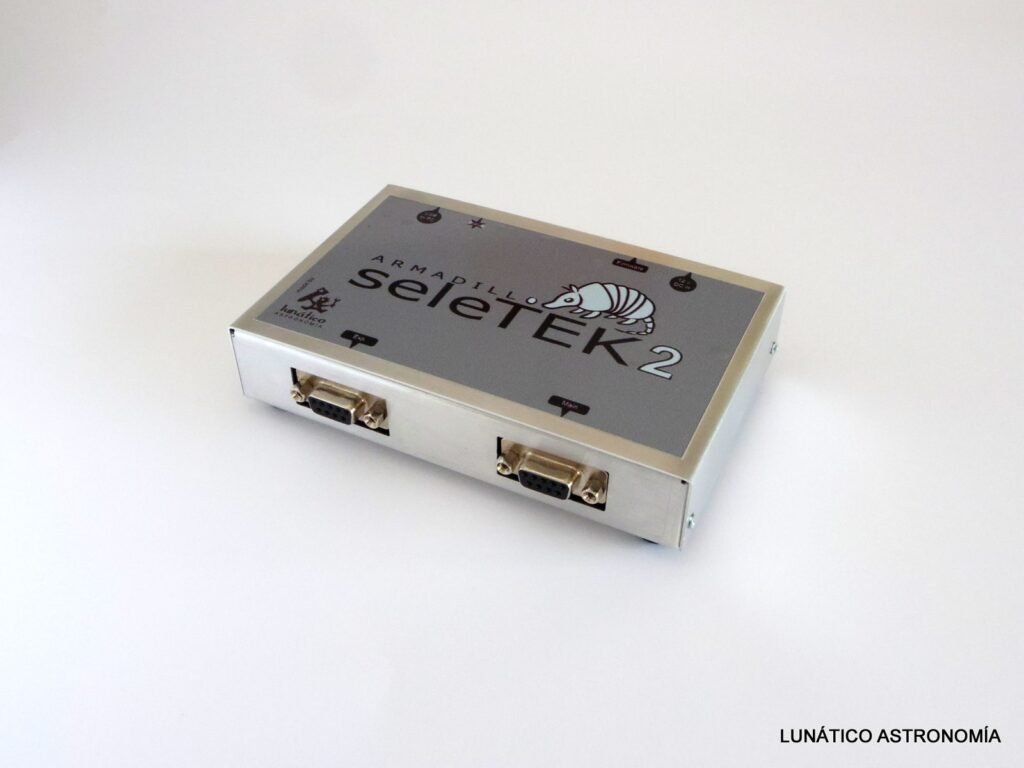
In all this time the index of failures or physical problems of our devices has been minimal and the few that have been have always been easily identifiable and repairable.
In addition, the stock Seletek motors have shown, after so many years, that they are equally reliable. They are high quality motors, with metal gears, at an affordable price and with a minimum failure rate. But together with the reliability of the controller itself, Seletek works with all existing software programs on the market and on all systems (ASCOM, Linux / INDI / INDIGO).
It is, therefore, a product well established in the market with which the client can have total peace of mind that he will get the best approach without complications, which also makes it ideal for the practice of remote astronomy.
2) Design
Some of the new focusers of other brands include the embedded motor with its cables, all «attached» to the focuser.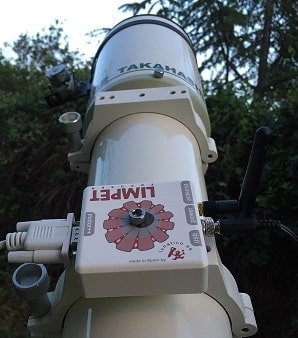
This configuration that can be attractive at first has in our opinion several drawbacks:
- it means increasing the number of cables from the focuser with the risk of accidents that this may imply
- increase the weight of the assembly off-axis with the risk of damage to the focuser that this may entail
- increases the volume of the set which can make maneuvering difficult with the telescope they are more difficult and uncomfortable to assemble and disassemble
- and last, the failure of any of the parts (electronic, motor) renders the whole product inoperative.
However, the traditional configuration of Lunático: motor with plate adapted to the focuser and autonomous controller placed, at the user’s choice, where it is less disturbing, is optimal and safe.
3) Versatility
The new controllers almost always use standard plates that fit, more or less, in the focuser, but, as they are adaptable generic models they often have too many parts or little precision, which can deteriorate the final focusing accuracy.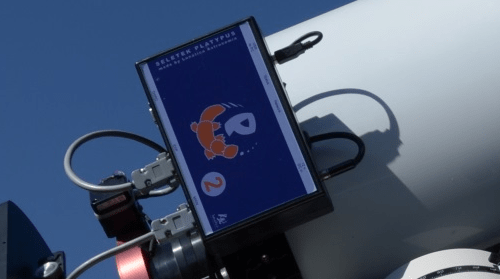
In Lunático Astronomía we have been designing and manufacturing plates for more than 10 years to adapt our motor to the different focusers on the market, therefore we have plates for practically all focusers.
And it is tailored for each focuser model so that its adaptation is perfect.
4) Software
The new market offer is limited to one focuser per device.
However the Seletek software allows you to control several focusers (up to 3 with the Platypus) simultaneously with a single device, as well as other elements such as rotators or heating bands and fans.
In addition, the Seletek focus software incorporates the most complete temperature compensation algorithm than any other controller on the market.
5) Price
Finally, as for the price of the devices, the new offer is uneven, and focusers of a lower or higher price than the Seletek line can be seen, it also depends a lot on the accessories that are included.
From Lunático we have always tried to find the most reliable and economical solutions for amateur astronomers and this has led us to manufacture ever with competitive prices, our Seletek range continues having very reasonable prices. Check them, we really want to continue counting on your trust.