Revista ASTRONOMIA nº234 | mayo 2018

Este mes probamos un polivalente motor de enfoque fabricado por Lunático; el denominado Tarsero. Se trata de un sistema de enfoque motorizado totalmente autónomo, sin necesidad de ordenador y compatible con la mayoría de enfocadores del mercado. Veamos cómo funciona.
Motorizar un enfocador no siempre es fácil. En la mayoría de los casos, para tener una motorización digna debemos adquirir enfocador y motor a la vez, de la misma marca y todo integrado. Moonlite, Starlight Instruments, JMI… son marcas que se han especializado en enfocadores y sus motorizaciones. Son productos de calidad asegurada (sobre todo Moonlite y Starlight) pero también son caros. La otra opción es mantener nuestro enfocador y adaptarle un motor con su mando de control. Aquí es dónde Lunático nos aporta lo que necesitamos: un diseño de pletina adaptadora hecha totalmente a medida para cualquier enfocador y un mando de control con múltiples posibilidades de ajuste además de contar con un sistema opcional de control de temperatura para trabajos de astrofotografía de cielo profundo principalmente. Por último, es también posible usar el Tarsero con otros motores que no sean el Seletek abriendo un abanico de posibilidades francamente muy amplio.
EN PARADO
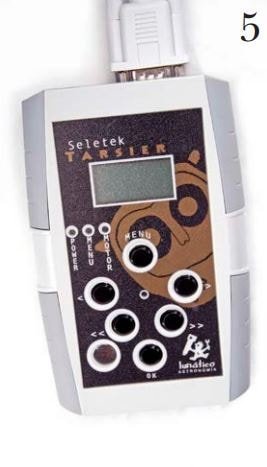
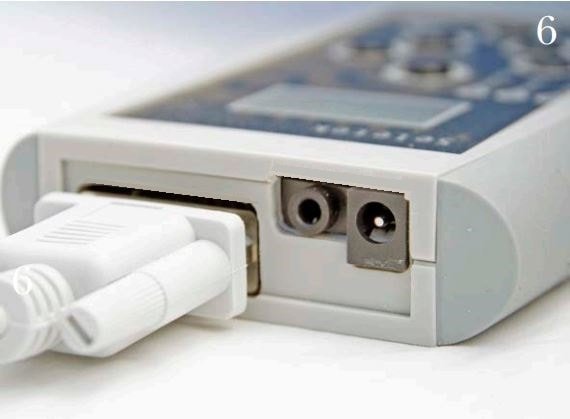
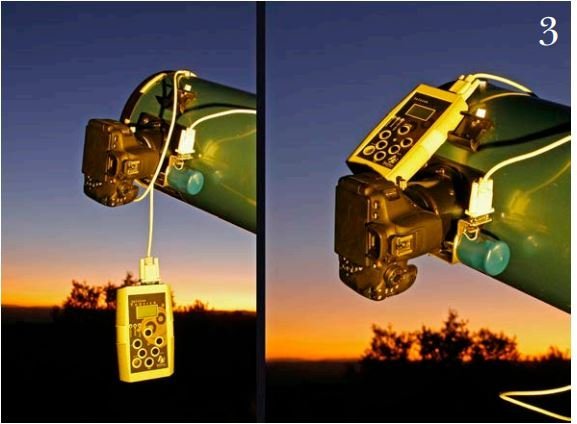
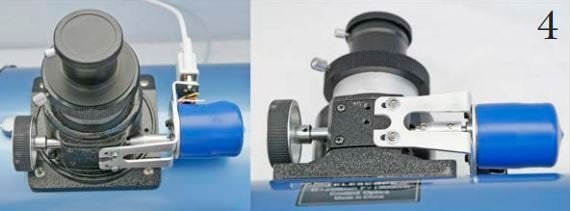
El conjunto que solicité para la prueba fue un motor Seletek paso a paso con pletina para el enfocador Crayford de una sola velocidad que monta mi viejo Newton Sky-Watcher 200/1000 y el mando Tarsero con su cable. Oye, este mando es algo grande. No es el clásico mando pequeño con dos botones y un regulador, el Tarsero tiene seis botones y una pantalla LCD. Lógicamente estos «añadidos» aumentan el tamaño (90 x 145 mm). Tiene los enchufes de alimentación y control (DB9) en su parte superior, lo cual supone un problema si quieres colgarlo de algún sitio. Echo de menos un cable o cuerda elegante, quizás hasta un gancho plegable, anclado en la parte superior del mando para poder colgarlo de cualquier sitio. Por ejemplo, de un gancho que podemos pegar a la chapa del tubo, cerca del enfocador. También tenemos la socorrida opción del velcro para pegarlo en el propio tubo.
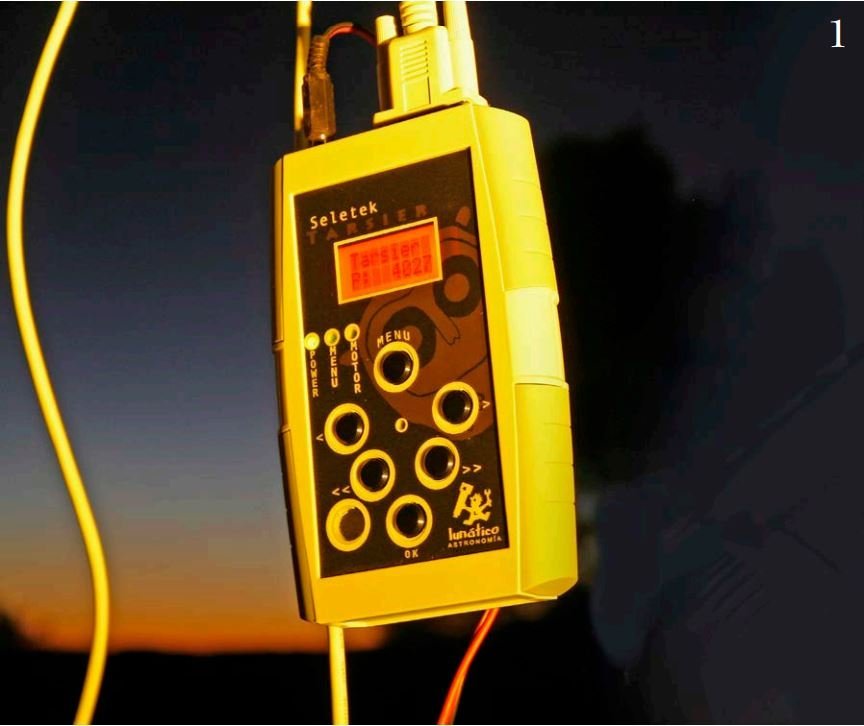
El cable DB9 de serie es largo lo que vendrá bien si manejas a cierta distancia el enfoque, esto generalmente se hace cuando tienes un ordenador conectado al telescopio y quieres hacerlo todo desde una mesa de control. Pero para un uso visual sobra mucho cable. Los cables siempre molestan y si son largos más. Recomiendo que si vas a usar el Tarsero a pie de telescopio, compres un cable DB9 macho/hembra más corto. Otro punto a tener en cuenta es que el Tarsero necesita alimentación 12V externa, es decir, no tiene alojamiento para pilas. Necesitaremos por ello alimentarlo con la misma batería que alimentamos la montura o con una mini-batería de 12V o paquete portapilas. Por lo demás, el tacto de los botones es correcto, están suficientemente separados (bueno cuando usas guantes) y todo parece indicar que será un mando eficaz.
PRIMER CONTACTO Y MEMORIA DE POSICIONES DE FOCO
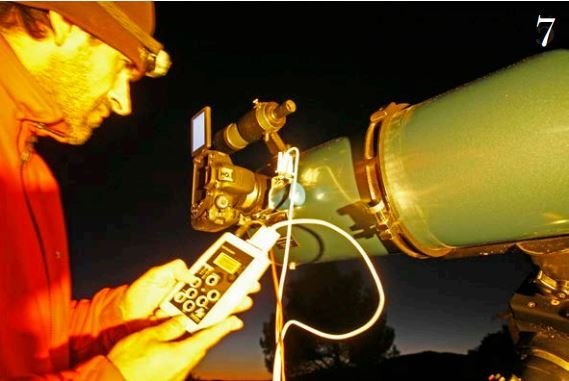
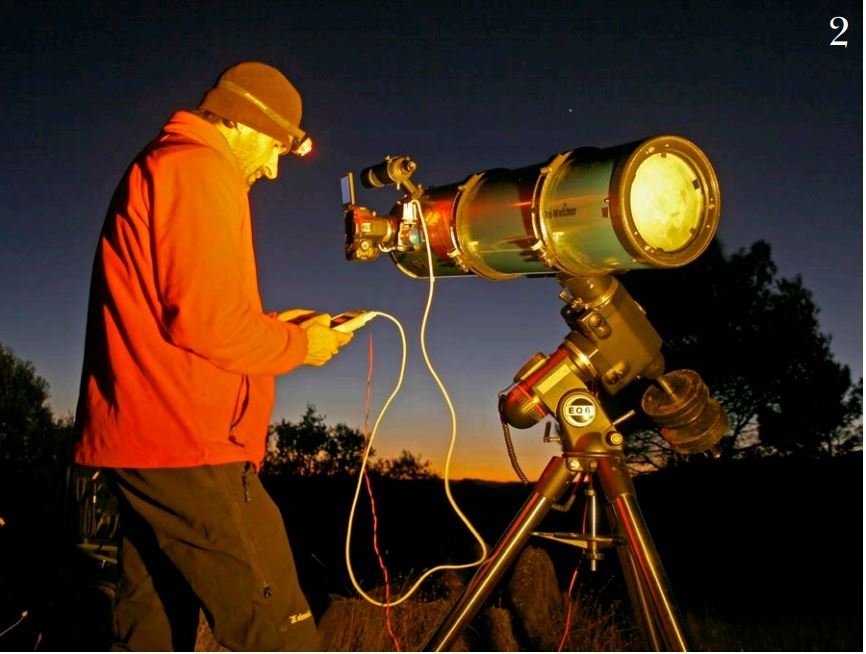
Después de la sesión fotográfica para ilustrar la prueba, comencé a «salsear» con el Tarsero adaptado al Newton 200 mm f /5 sobre montura EQ6. Enchufamos motor y Tarsero con el cable DB9, anudamos
parte del cable para acortar su longitud y lo que sobra lo enrollamos al soporte del buscador para poder «sujetar» el mando. Con un segundo cable de alimentación conectado a la batería de la montura alimento el Tarsero con 12V, clavija clásica de alimentación, polo positivo en el centro y negativo al exterior. De hecho, es la misma que usamos para alimentar las NEQ6, Dobson GoTo, etc. En cuanto enchufas se enciende, es decir, no es necesario darle a ningún interruptor. La pantalla se ilumina mostrándome por defecto la posición del enfocador en número de pasos. Una de las cosas que me gustó mucho del Tarsero es la posibilidad de memorizar una lista de posiciones de foco determinadas. Hay que valorar la sencillez de uso y manejo del menú y de las operaciones básicas. Un ejemplo, quise memorizar una lista de posiciones de foco para cada ocular que iba a usar. En concreto para un Eudiascopic de 35 mm, un Eudiascopic de 20 mm, un Baader Ortho de 9 mm y sistema Barlow 3X + Ortho 9 mm. Coloqué primero el 35 mm y hala, a enfocar. Los dos botones inferiores actúan en
velocidad rápida así que son los adecuados para enfocar con pocos aumentos. No necesitas los botones de velocidad lenta que están justo encima de los de velocidad alta. Pues bien, en este caso, el foco con el 35 mm estaba en la posición 944 pasos del motor. Solo debes pulsar de forma prolongada el botón OK para que te avise el propio mando de que acabas de memorizar esta posición de foco. Te lo apuntas en un papel; Eudiascopic 35 mm, foco en posición 944. Y así con el resto de oculares. Es muy útil por varios motivos. Primero está muy bien el hecho de que, cuando por ejemplo quieres cambiar del 35 mm al 9 mm, viendo la Luna como fue mi caso, puedes dar la orden de que se vaya a la posición del 9 mm (en posición 2681 pasos) incluso antes de quitar el ocular de 35 mm, sabiendo que al poner el 9 mm y esperar unos segundos, tendrás el foco en su sitio. O al revés, si quieres cambiar a un nuevo objeto y deseas sustituir el 9 mm por el 35 mm, das la orden y durante el tiempo que dura el GoTo, Tarsero te habrá posicionado el enfocador para el 35 mm. Otro motivo por el que está genial memorizar las posiciones de foco con tus oculares es para los casos que usas Barlows. El desenfoque es tan grande cuando colocas una lente de Barlow que a veces te cuesta más tiempo del deseado saber si estas mejorando o empeorando el foco. El motor nunca puede ser tan rápido como la mano… Con una posición memorizada (en mi caso, 9 mm + Barlow 3X estaba en 6035 pasos), le das y sabes con certeza que mientras colocas la Barlow y el ocular, el enfocador estará yendo hacia la posición correcta. Me gustó mucho esta opción, ahorra tiempo y es muy fácil confeccionarla. Para que Tarsero guarde la lista, la «salve», para que la recuerde al volverlo a usar otro día, debemos, antes de desconectarlo, pulsar de forma prolongada la tecla MENÚ y listo. Aparece el mensaje de que la lista se ha guardado y ya la tienes lista para usarla siempre.
VELOCIDADES
Algo muy interesante que nos ofrece el Tarsero es que puedes ajustar la velocidad del motor a tu gusto, fijando un valor de entre 0 a 100. Son milisegundos por paso, así que a valor bajo velocidad más rápida y viceversa. Tanto para los botones de velocidad alta como para los de velocidad lenta. Sin embargo, la velocidad máxima tiene un límite. Cuando llegas a ese límite el motor se mueve un poco y se para, transmitiendo solo vibraciones a la imagen. Con la unidad de pruebas, el valor para la velocidad máxima que me gustó fue de 7 en alta y 15 para la lenta.
VIBRACIONES Y HALFSTEP
Los pasos de los motores de enfoque suelen transmitir pequeñas vibraciones a la imagen. Quizás sea más fino un sistema de poleas, no los he probado aún, sí conozco los Moonlite servo y aunque son finos, también aplican una mínima vibración con muchos aumentos. La velocidad rápida del Tarsero vibra algo más que la lenta pero como la usas con pocos aumentos pues no notas nada. La imagen estelar es estable durante el proceso de enfoque. Me importa más lo que vibre la velocidad lenta porque esta será la importante cuando observemos con más de 100X. Estuve viendo el terminador de una Luna menguante con un seeing majo. Una vez centrada con el 35 mm busqué la posición memorizada del conjunto Barlow 3X + Ortho 9 mm, ordenas GoTo y mientras quitas el 35 y montas la Barlow y el ortoscópico, el enfocador ya está yendo hacia la posición de foco correspondiente. Con rangos altos de aumentos es normal tener que afinar el foco con la velocidad lenta. Estamos a 333X y puedes notar como la imagen pierde un poco de foco por culpa de las vibraciones del motor. Para minimizar esto, Tarsero tiene la opción denominada HalfStep que consiste lógicamente en que en lugar de mover un paso entero, el motor se mueve de medio a medio paso, más lento y quizás más suave y, por tanto, generando menos vibraciones. Así fue. Para afinar el foco en alta resolución es mejor activar la opción HalfStep en el Tarsero. La vibración baja considerablemente y facilita, ahora sí, encontrar el foco perfecto sin problemas. De todas formas, creo que para un observador experimentado, la mejor forma de proceder para enfoques críticos es con la pulsación normal y no la prolongada sobre el botón. Si pulsas y sueltas enseguida, el motor se moverá solo un número de pasos determinado y ajustable a nuestro gusto mediante el parámetro HighACC. A mí me encantó esta función de «un solo toque» para enfocar con muchos aumentos ya que la imagen se estabiliza, valoras, otro toque, se estabiliza, valoras… El valor de desplazamiento que me gustó fue de 12 pasos por cada toque. Por cierto, mismo modo de enfocar que me gustó al utilizar una cámara DSLR a foco primario.
CONCLUSIÓN
Tarsero es un mando para motores de enfoque muy completo, con muchos ajustes realmente útiles y con un menú muy fácil de usar. Es además compatible con casi cualquier motor de enfoque que conozcas. Se echa de menos poder colgarlo mediante algún sistema. El conjunto con el motor Seletek funciona muy bien. Puedes adaptarlo a prácticamente cualquier enfocador «serio» del mercado y gracias a los múltiples ajustes posibles puedes personalizarlo y afinarlo para realizar un enfoque preciso. Útil para equipos propensos a vibrar y también para trabajos fotográficos.