
Australia offers 22 mpsas skies, a fully unobstructed 360° horizon, and full access to the southern sky.
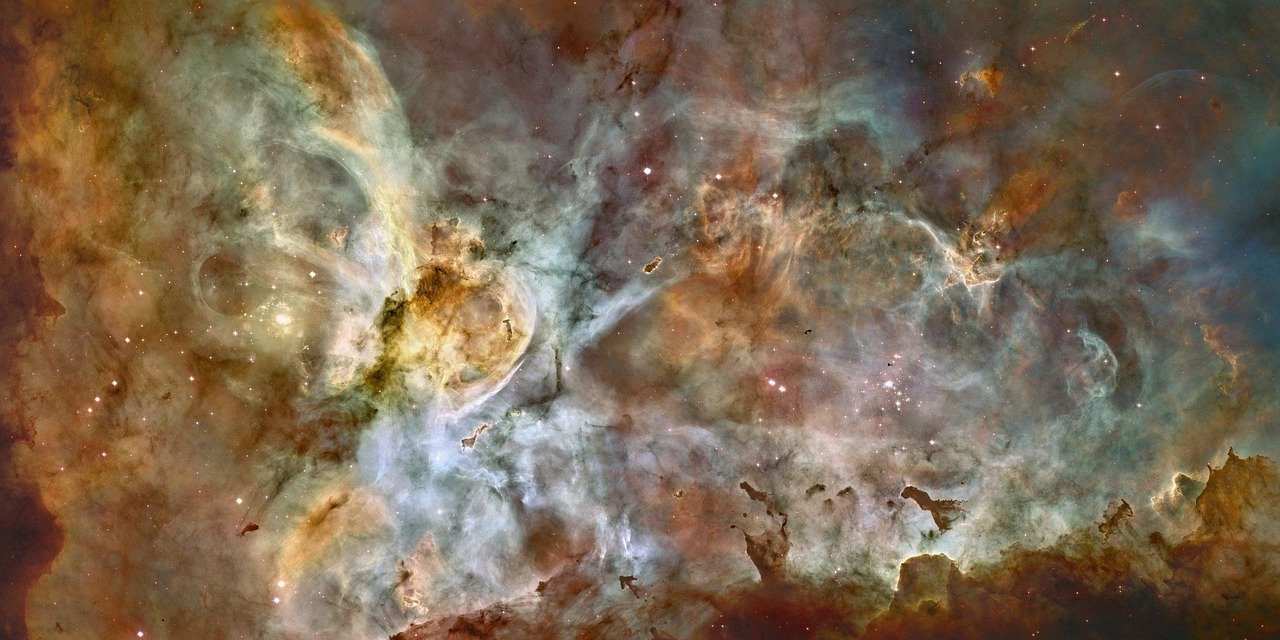
Carina Nebula (NGC 3372). Image: WikiImages via Pixabay
Some nights promise everything: clear forecasts, stable seeing, perfect plans — and then the clouds roll in.
Other nights are beautifully clear, but certain objects never rise high enough — or never rise at all.
Different skies, different frustrations. Yet the same quiet thought remains: what if the limitation isn’t the equipment, but the location?
There is one thing your current latitude may never provide: full access to the dark southern sky.
That’s where a different kind of solution comes into play.
Remote Observatory Hosting in Australia
In rural Western Victoria, Australia, a new remote observatory hosting site has launched, purpose-built for long-term, remote imaging under consistently dark conditions.
At Lunaticoastro, we’re proud to introduce a project where we share both vision and technology, with our systems integrated on site as part of the infrastructure.
And the figures are difficult to ignore:
- 230–240 clear nights per year,
- Sky quality reaching 22 mpsas,
- A truly unobstructed 360° horizon, and
- Full access to the southern sky
Stable power, robust networking, and continuous environmental monitoring ensure that once your system is commissioned, it simply works.
Carina.
The Magellanic Clouds.
Centaurus A
…in full detail.
Whether you’re expanding your setup or simply looking for more consistent conditions, this is an opportunity to work under genuinely dark skies.
Operating a remote telescope in another hemisphere naturally raises practical questions: installation, safety, technical support, shipping, and long-term maintenance.
Below, we’ve gathered the most common ones to help you understand how the process works in practice.
Practical Questions About Remote Hosting
Why choose RentAnObservatory as your remote telescope observatory?
RentAnObservatory, provides a premium remote imaging environment designed for astrophotographers who expect reliability, precision, and world class dark skies. Situated in rural Western Victoria, the site offers exceptionally clean southern skies, engineered infrastructure, and professionally managed facilities that keep your equipment performing at its best.
Why discerning imagers choose RentAnObservatory:
- You send your system, they handle the installation, alignment, configuration, and on-site integration
- Truly dark skies with minimal light pollution for deep, clean data
- Purpose-built observatory facilities designed specifically for unattended, long-term remote operation
- Stable power, robust networking, and continuous monitoring
- Expert support from a team that designs and installs observatories across Australia
- Once everything is commissioned, you simply log in and start collecting data with confidence
If you want your telescope operating under exceptional skies without the burden of maintaining your own observatory, RentAnObservatory delivers a secure, premium remote imaging solution.
How are you able to offer lower pricing than other remote observatory providers?
The model is simple.
You provide the equipment, and RentAnObservatory supplies the environment, engineering, and expertise required for reliable remote operation. By focusing on what matters, thet deliver a premium experience without unnecessary overheads. The result is professional installation, dependable infrastructure, and consistently high quality imaging conditions at a price that reflects value, not compromise.
How does remote telescoping work?
For imagers who want consistent access to dark skies without the travel, RentAnObservatory offers a refined, turnkey remote setup.
You provide the telescope, and the team manages the complete installation and configuration on one of their purpose-built piers.
Once commissioned, your system is ready for use whenever the sky allows. Their automated roof systems expose your telescope to exceptionally dark, stable southern skies, delivering imaging conditions that are difficult to achieve anywhere near urban areas. From there, you operate your telescope remotely with the same control and precision as if you were standing beside it, while enjoying the comfort and convenience of imaging from home.
What if I have more than one telescope I’d like to use?
For imagers who require more than one optical system, RentAnObservatory offers flexible options to expand your setup while maintaining the same professional standard of performance and reliability.
Piggyback or Side by Side
For suitable equipment sizes, you can mount an additional telescope on your primary system using a piggyback or side by side configuration. This option is available on Lite piers and above.
Pricing is set at 50 percent of the full pier rental, calculated according to the size of the additional telescope. This reflects the additional installation work, maintenance requirements, and shared infrastructure resources associated with multi-instrument setups.
Separate Pier
Alternatively, you may rent a full additional pier if you prefer each telescope to operate independently. This is ideal for imagers running simultaneous projects or working with larger instruments.
Both options are supported by the same high-quality installation, ongoing monitoring, and infrastructure reliability that define the RentAnObservatory experience.
Will my equipment be safe?
Your telescope is housed within a secure, purpose-built remote observatory. The facility is gated, monitored, and equipped with continuous on-site surveillance.
Your system is managed using our Starling Observatory Control System, supported by CloudWatcher and SOLO for real time environmental, weather, and safety monitoring.
Power, connectivity, and operational status are monitored around the clock so your equipment remains protected, stable, and ready to use whenever the skies are clear.
Can I get technical support for my telescope?
RentAnObservatory provides dedicated on-site support to ensure your system continues to operate at the standard expected from a premium remote imaging facility.
The team has extensive hands-on experience across a wide range of telescope configurations, and most support needs can be addressed within 48 hours.
Routine checks and simple tasks are included as part of our monthly maintenance cycle at no additional cost—for example removing a lens cap, confirming a connection, or visually verifying equipment status. For more specialised work, including collimation, tip tilt optimisation, mechanical adjustments, or other technical alignment requirements, advanced support is available at $75 AUD per hour.
Our priority is to keep your equipment performing reliably under clear skies, with the confidence that experienced technical support is always available when needed.
What do I need to send?
RentAnObservatory provides the pier, pier adapter, Ethernet connection, and AC power to the mount location. Everything else that forms your imaging system comes from you, ensuring the setup reflects your preferred hardware, workflow, and calibration standards.
Below is a clear guide to what you will need to send.
Imaging essentials
• Telescope
• Mount
• Imaging camera
• Guide scope or off-axis guider
• Guide camera
• Control computer such as a mini PC or similar
Peripherals and supporting hardware
• All required USB cables for your system
• Power supplies for each device
• Power distribution hardware such as a Pegasus, ASIAIR, or other power hub
• Ethernet switch if you are running multiple network devices
• Any additional Ethernet cables required for your setup
It is strongly preferred that all customer-supplied power hardware and accessories run on 12V. This keeps systems standardised, stable, and easier to support.
Mounting essentials
• Polar alignment pins from your tripod, so we can attach them directly to your pier plate
• Tripod flange screws, for example the standard three M6 bolts used with AM3 or AM5 mounts
• Any specialised pier adapters, such as GM1000HPS or CGX plates
Shipping Your Telescope Gear to Rent An Observatory
Preparing your gear properly ensures a smooth installation once it reaches the facility. Clear labelling and careful packing also help RentAnObservatory rebuild your system exactly as intended.
Before you ship
• Label every component with your name. Over-labelling is welcome, it keeps everything organised during installation.
• Include photos of your current setup, along with any specific installation notes. This allows them to replicate your configuration accurately on the pier.
• Provide an itemised packing list of every component you’ve sent. RentAnObservatory uses this to confirm all items are accounted for on arrival.
Packing your equipment
Insure your shipment. Accidents are rare, but if gear is packed poorly and damaged in transit, it is the sender’s responsibility.
When preparing your hardware:
• Remove the focuser from the OTA
• Unplug all USB devices
• Remove flat panels
• Detach your imaging camera from the telescope
• Pack counterweights and other heavy items separately
• For German equatorial mounts, disengage gears or clutches
• For SCTs, lock the primary mirror and tighten secondary screws. The team can collimate on arrival.
• Use original boxes or hard cases whenever possible. Include a return label if you want the box back.
• Put lens caps and covers on all optics
• Use painter’s tape if anything must be secured, it does not leave residue
Protection during transit
• Wrap all components generously in bubble wrap
• Surround them with peanuts, airbags, or newspaper
• Pack accessories that protrude, such as EFWs, EAFs, flat panels, or 3D printed parts, separately
• Take a few photos of your packed gear. RentAnObservatory do the same when it arrives so the condition is documented at both ends
Arrival on site
Once your equipment reaches the observatory, RentAnObservatory takes care of the full installation, cable management, and integration. You do not need to provide zip ties, brackets, or mounting accessories. Everything required for a clean, reliable installation is handled on site.
If you prefer a specific cable layout or arrangement, include notes or photos and RentAnObservatory will follow them during setup.
They look forward to getting your system installed and ready to image under dark Australian skies.
Should I Get Shipping Insurance?
Yes. It is strongly recommended insuring your equipment before sending it to RentAnObservatory. Transport damage is rare, but it does happen, and insurance is the only way to properly protect your gear while it is in transit.
All shipping risk sits with the customer. RentAnObservatory (Astroworx) cannot accept liability for any loss or damage that occurs on the way to them or on the way back to you.
If something arrives damaged, RentAnObservatory will help however they can, including photographs, condition reports, and documentation to support your insurance claim. They just cannot cover or reimburse any shipping-related losses.
Shipping insurance is inexpensive compared to the value of your equipment, and it gives you peace of mind from the moment it leaves your hands.
Can I send my EQ6-R mount?
Yes, you can. RentAnObservatory accepts EQ6-R, EQ5, and Sirius class mounts. These systems use a single bolt base and require a custom two tier pier plate for secure and repeatable installation. They manufacture this plate in-house, and a one-time machining fee of $259 applies.
They do not accept third party pier adapters unless they have been reviewed and approved by RentAnObservatory staff in advance. Their priority is to ensure safe, stable, and mechanically appropriate setups for unattended operation.
Most mounts in this class do not have homing capacity, which means additional care is required from the user to ensure the system is correctly parked at the end of each session. It is the responsibility of the end user to operate the mount safely, maintain correct parking behaviour, and ensure the system is running smoothly during remote use.
Should I fully test my gear before shipping it?
Yes, RentAnObservatory strongly recommend giving your equipment a full test run before shipping. A system that has already been powered up, connected, and verified will transition into remote operation far more smoothly, allowing you to begin imaging sooner once it is installed on the pier.
However, testing is not mandatory. The technicians are fully capable of assembling and configuring completely new or never-used systems, including full turnkey packages. If your setup arrives untested and requires additional troubleshooting, calibration, or diagnostic work, advanced technical support service is available at $75 per hour to ensure everything is configured to your preferred workflow.
The RentAnObservatory goal is to deliver a reliable, well-integrated system, whether it arrives fully tested or straight out of the box.
Expanding your imaging capabilities does not always require new equipment.
Sometimes, it simply requires a different sky.
If you’d like to explore whether a southern setup fits your workflow, we’re happy to discuss configurations in detail.
Or email us directly at info@lunaticoastro.com