Why sensor size matters
The physical size of an imaging sensor determines the field of view when combined with a given focal length telescope. A larger sensor captures a wider field; a smaller sensor captures a narrower, more magnified view. Understanding sensor dimensions lets you predict imaging scale, plan mosaic sequences, and select the right camera for your telescope and targets.
Common sensor formats
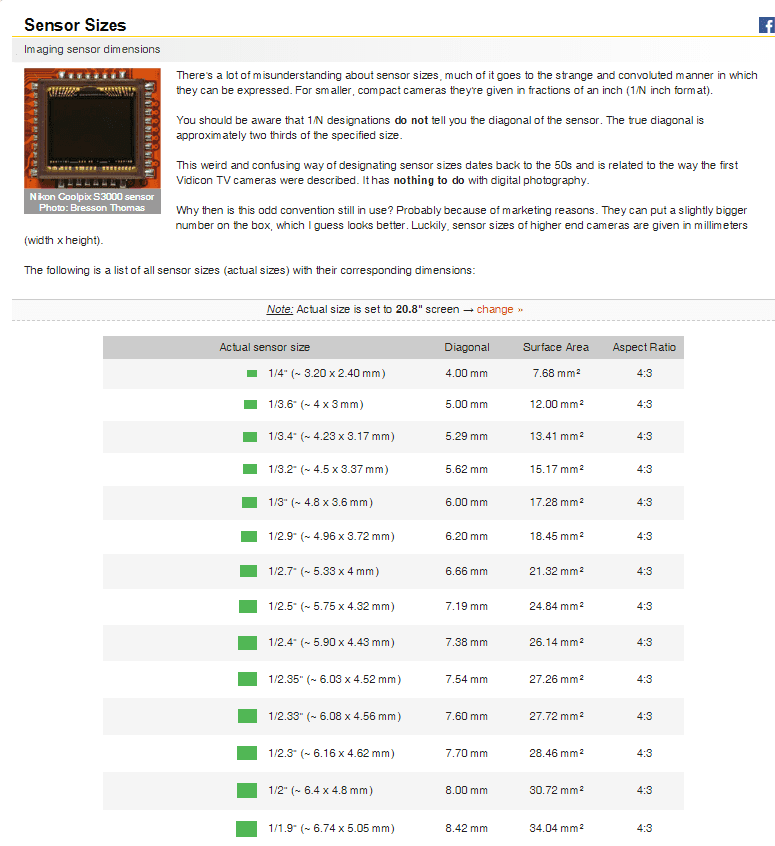
Astronomical cameras are available in a wide range of sensor formats, from small monochrome sensors suited to planetary imaging to large full-frame or medium-format sensors for wide-field deep-sky work. The diagrams below show the relative sizes of common formats.
Calculating field of view
Field of view (in degrees) can be calculated from sensor dimensions and focal length:
FOV = 2 × arctan( sensor_size_mm / (2 × focal_length_mm) )
For practical calculations, online FOV calculators accept sensor dimensions directly and show the result overlaid on sky charts.
Focuser consideration: Larger sensors need larger focuser drawtube openings to avoid vignetting at the image corners. Full-frame sensors typically require a 3" focuser; most APS-C and smaller sensors work well with a 2" or even 1.25" drawtube if the optical train is well-matched.