
The storm and the data
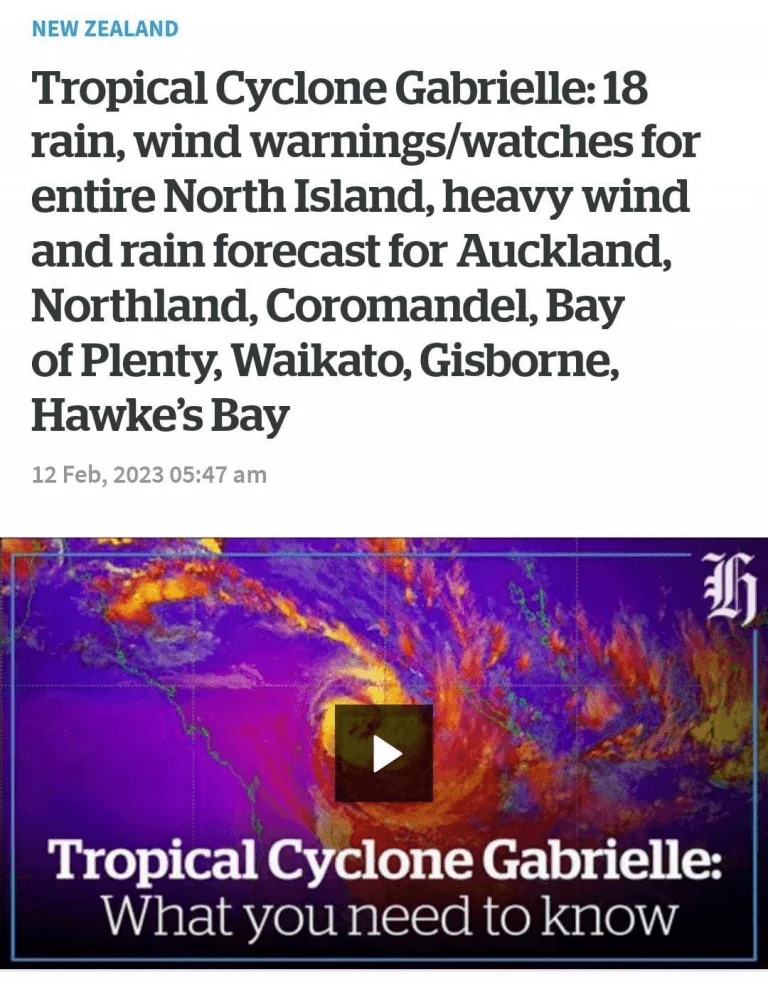
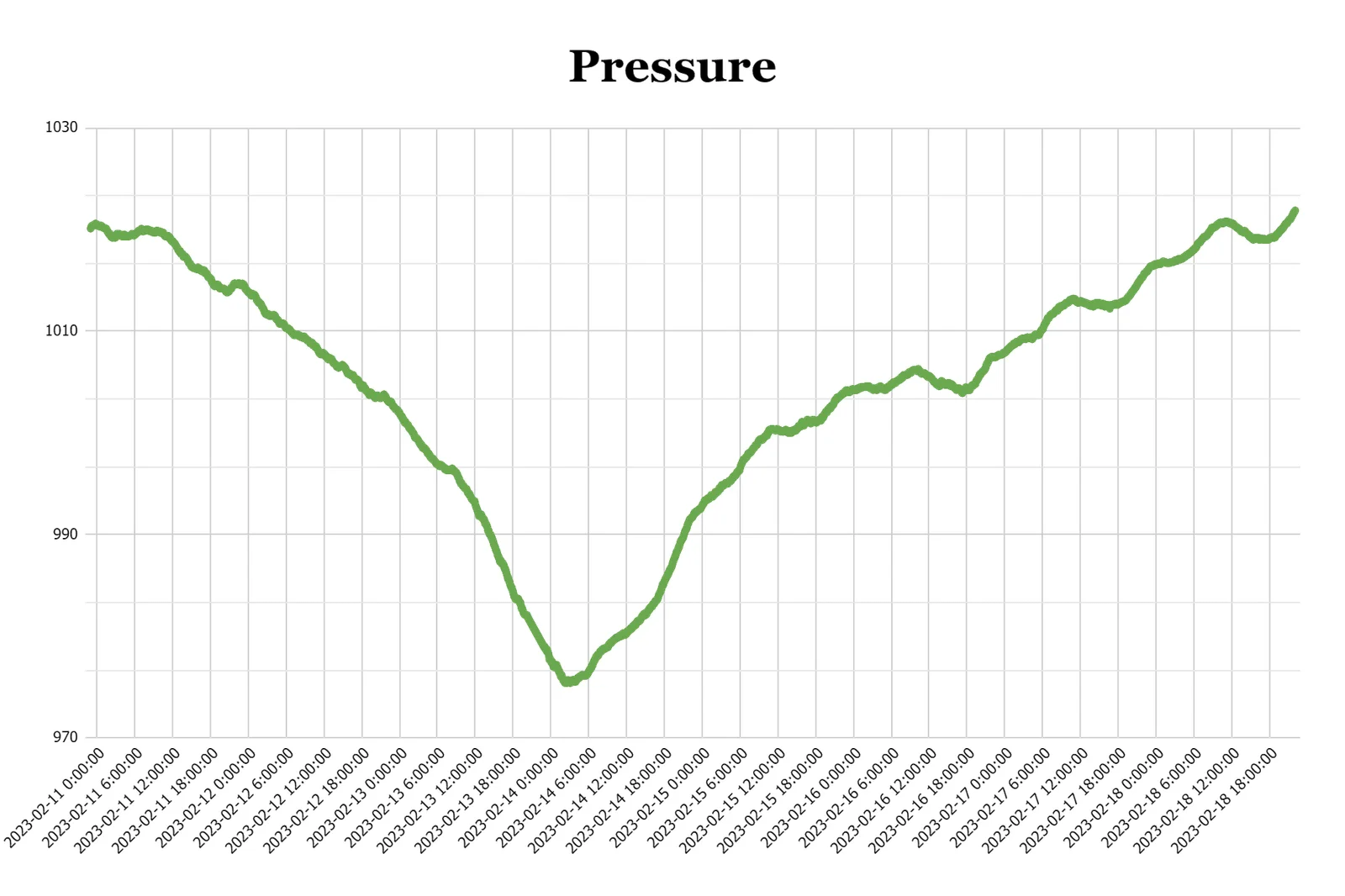
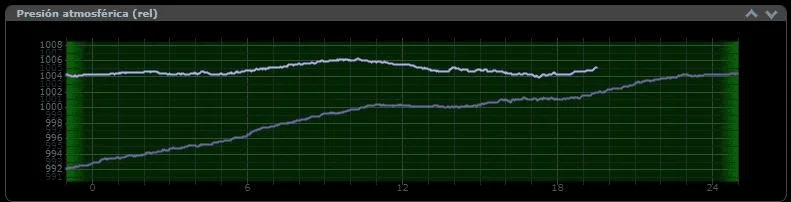
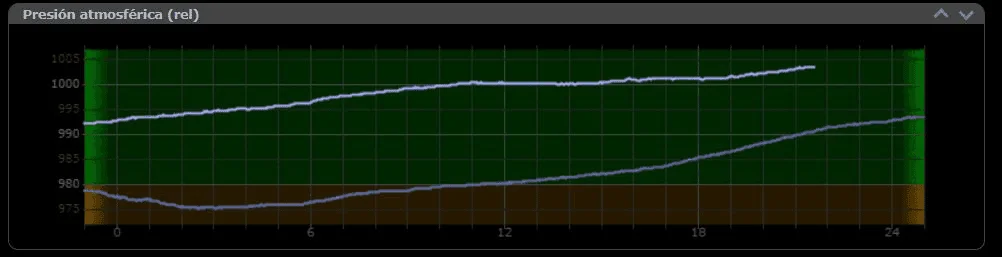
New Zealand sits between two tectonic plates and is no stranger to severe natural events, from earthquakes to volcanic eruptions—and, increasingly, extreme weather. Cyclone Gabrielle wreaked havoc across New Zealand, causing widespread flooding and damage in the north of the North Island, and many families continued to face difficulties in its aftermath. The CloudWatcher in Hamilton recorded the classic pressure signature of a passing cyclone: a steep drop as the system approached, a brief trough at the centre, and a recovery as it moved away.
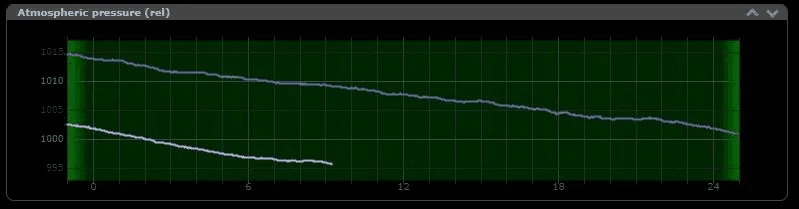
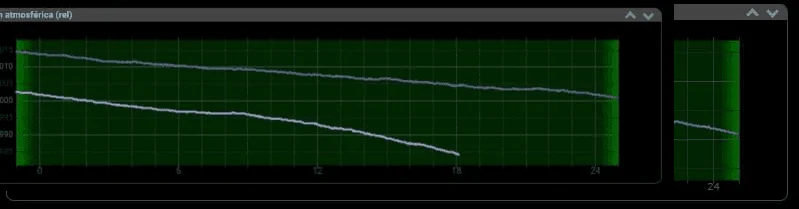
The device captured readings from February 13 to 17, documenting the complete atmospheric evolution of the storm. Pressure readings during the event show behaviour dramatically different from the sensor's day-to-day readings.
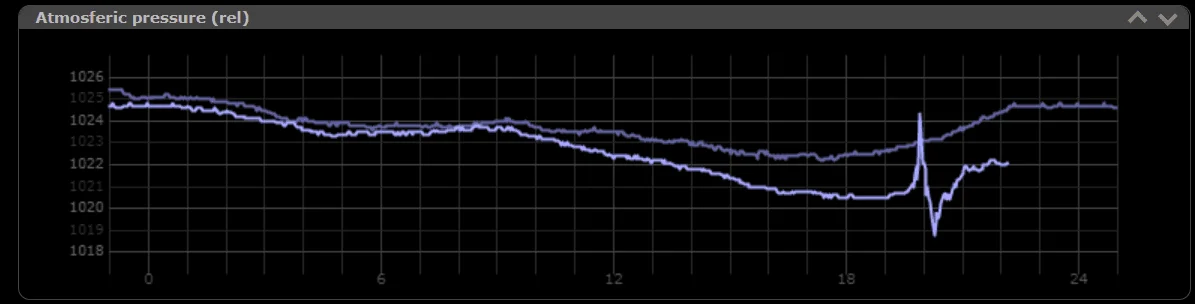
Live data from the Hamilton CloudWatcher unit is available at aagsolo.lunatico.es:10800
A familiar measurement, an unfamiliar reading
For most of its life, a CloudWatcher atmospheric pressure sensor records the gentle daily oscillation of fair weather. During Cyclone Gabrielle, the same sensor recorded a radical decrease in atmospheric pressure, of a kind it rarely sees.
The combined pressure graph across the storm period makes the cyclone's passage immediately visible; there is no ambiguity about when the storm arrived or when it left.
Pressure readings—hour by hour
Snapshots of the SOLO interface at different points during the storm show how the pressure evolved across February 13, 15, 16 and 17: from the initial drop, through the lowest readings, and into the recovery phase. Around 3am on the 14th, the pressure can be seen increasing again.
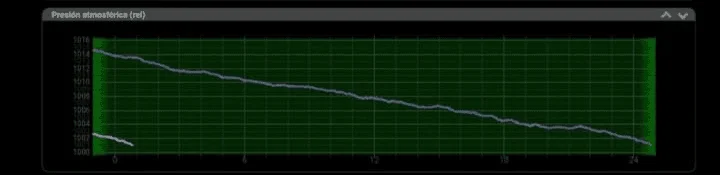
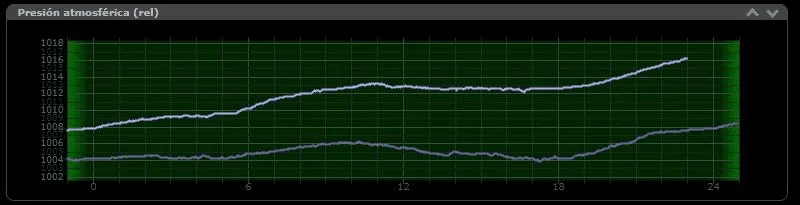
Compared to a normal day
It's interesting to compare these graphs to a normal day's pressure readings.
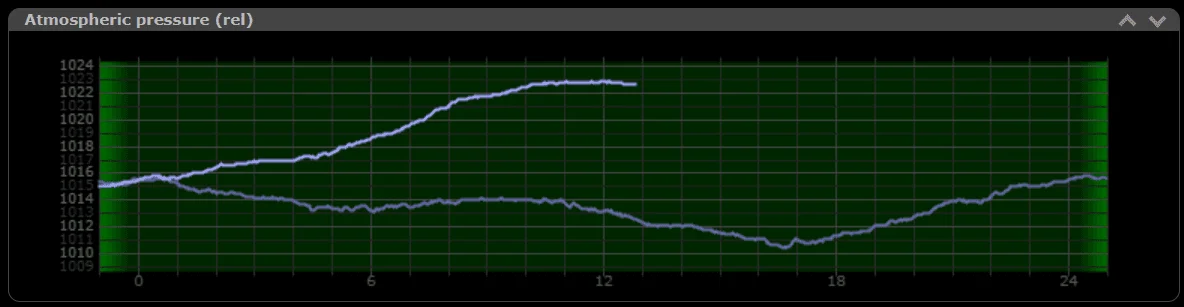
A record of extreme events
This reminds us of the previous year's Hunga Tonga volcanic eruption, which was also recorded by one of our devices.
We extend our best wishes to all those who were affected by Cyclone Gabrielle, and to those who were still dealing with its consequences when this was written. Stay safe during severe meteorological events.