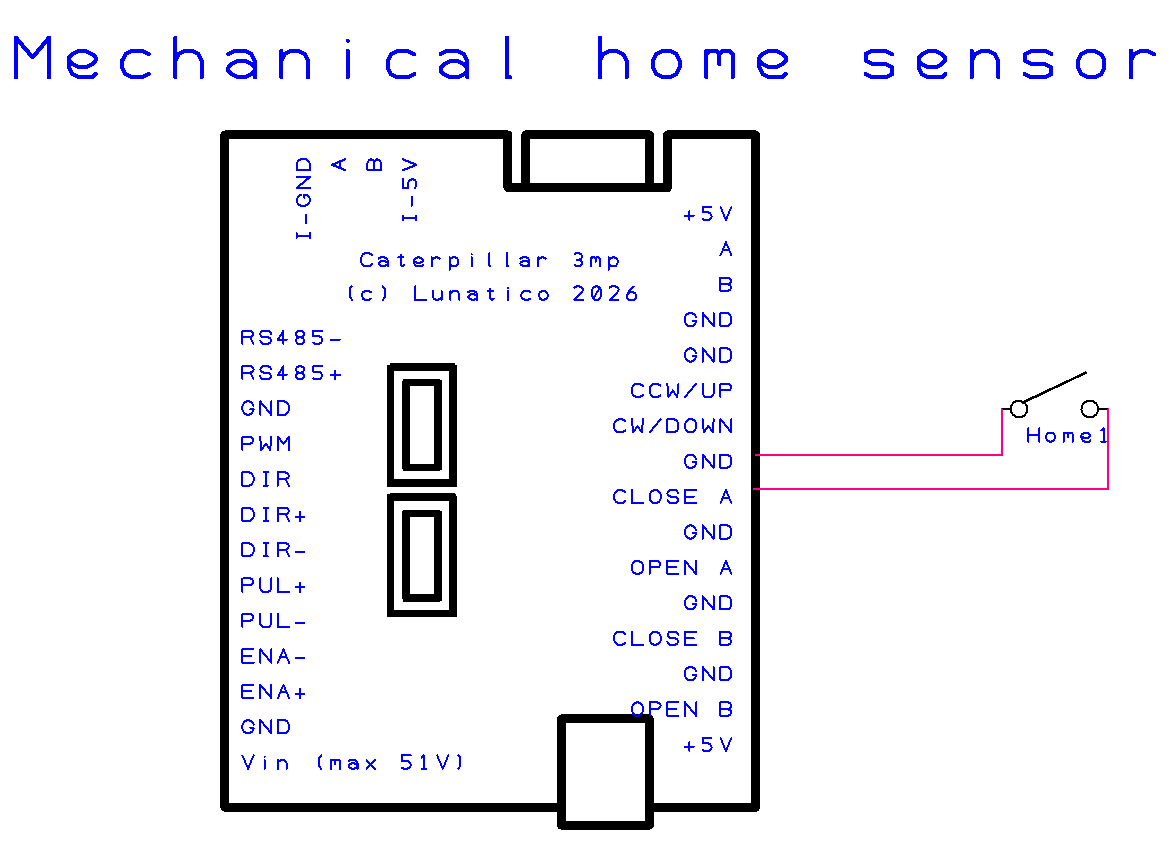
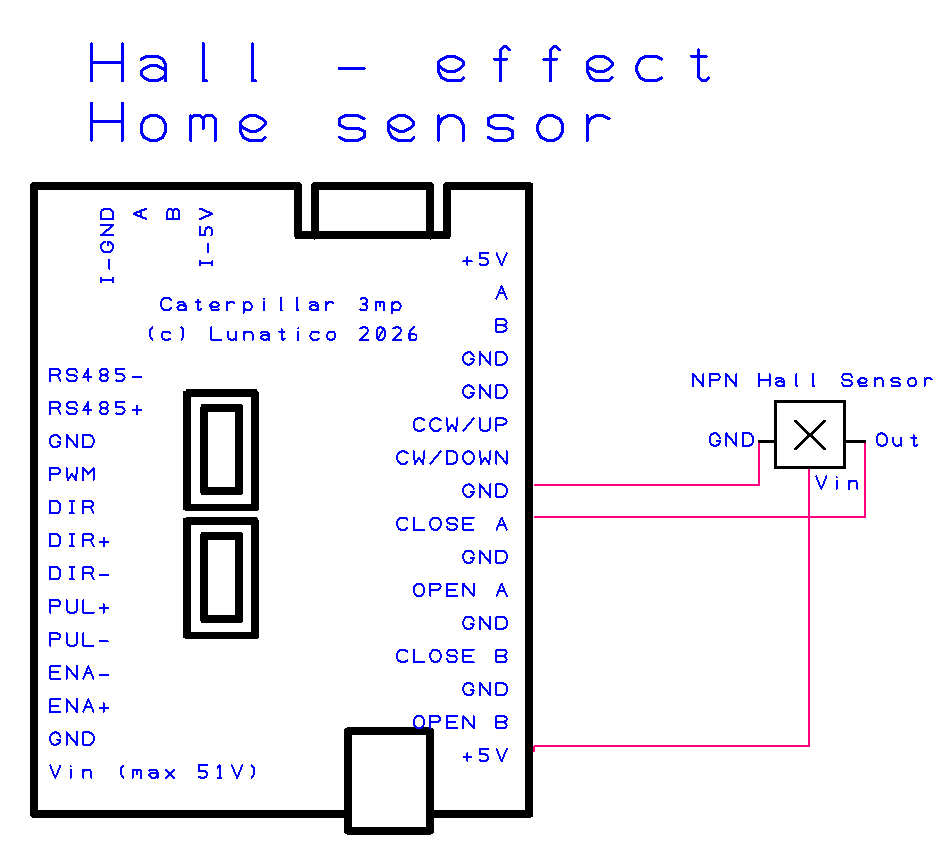
The rotation unit needs a home sensor. Both a mechanical or a hall-effect sensor (usually preferred) can be used. They are wired to the same connector on the board, which provides +5 V required for the hall-effect one.
The shutter has no home sensor—its open and close positions come from limit switches instead.
In normal operation, should the home sensor not be found after a complete revolution, the system will stop and issue a warning.
Hall-effect sensor (preferred)
Popular NPN hall-effect sensors include an LED that will light when the sensor is active, which is very convenient to test the system during installation.
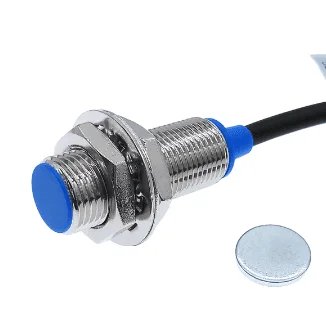
Tested Hall-effect sensors
One sensor we have tested to work with the +5 V from the Caterpillar board is the NJK 5002C.
Mechanical limit switch
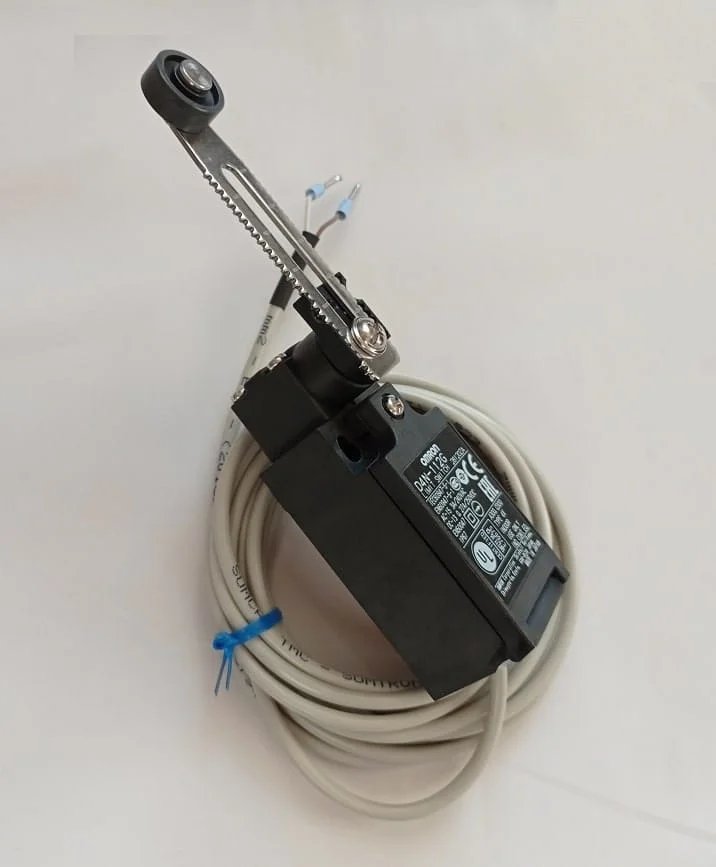
A mechanical push-button or lever switch can also be used. For switches with two closed positions (i.e. the lever can be pressed from either side), precautions must be taken so it is only triggered at one point per revolution. A good approach is placing the sensor horizontally, so the dome lowers the switch when reaching the home position, rather than pushing it sideways—this way only one consistent trigger point is possible.