Revista ASTRONOMIA nº215 | mayo 2017

No hace mucho, Lunático sacó al mercado un buscador de la Polar electrónico. Se trata de un accesorio que mejora la precisión de la puesta en estación de una montura ecuatorial. Veamos cómo funciona.
Todos sabemos que para que una montura ecuatorial tenga sentido, hay que orientar su eje de ascensión recta al polo norte celeste. Por suerte, en el hemisferio norte tenemos una referencia estupenda para poder localizar con precisión este punto del cielo; la estrella Polar. Por este motivo, todos los buscadores de la Polar que se venden para monturas ecuatoriales tienen unos grabados que nos indican dónde está el polo norte celeste respecto a la siempre visible estrella Polar. Es el método clásico. Para que sea efectiva la puesta en estación, la montura debe estar bien nivelada respecto al suelo y sobre todo, el propio buscador de la Polar debe estar alineado con el eje AR de la montura. Esta es una operación sencilla que se hace solo una vez.
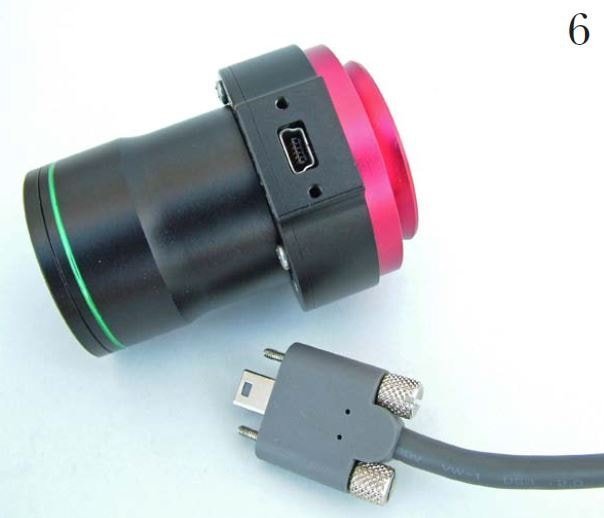
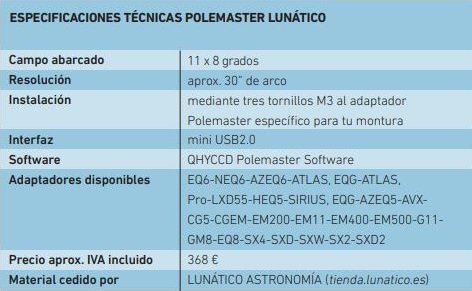
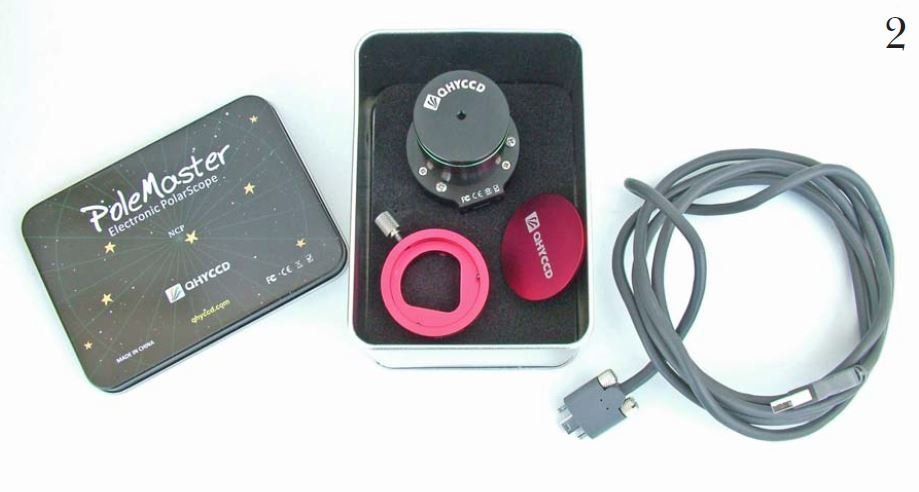
Es un buen método pero suele tener sus imprecisiones ya que, al fin y al cabo, la puesta en estación se hace «a ojo», moviendo los mandos de azimut y latitud de la montura mientras ves a través del buscador de la Polar cómo vas metiendo en su sitio a dicha estrella. Los hay de varios tipos, pero lo importante es que es un método que puede generar pequeñas imprecisiones. Lunático nos presenta un buscador de la Polar electrónico llamado Polemaster. Su funcionamiento es muy sencillo: colocar una cámara con objetivo en el mismo eje AR de la montura. Esta cámara detecta la estrella Polar y otras a su alrededor. De esta forma el Polemaster sabe hacia dónde apunta la montura y cuánto está desviada respecto al polo norte celeste. Además (esto es una gran noticia), el software del Polemaster calcula el posible descentramiento que pueda existir entre el eje mecánico de la montura y el propio Polemaster. El Polemaster calcula este descentrado y lo tiene en cuenta para localizar el polo norte celeste. Las preguntas son evidentes; ¿será realmente más preciso el Polemaster que una buena puesta en estación visual? ¿Es tan sencillo como parece? A estas preguntas daremos respuesta con esta prueba. Recordemos que una buena puesta en estación mejorará la precisión de los GoTos y también mejorará el autoguiado, ya que tendremos menos deriva en declinación. Vamos allá.
ACOPLANDO EL POLEMASTER
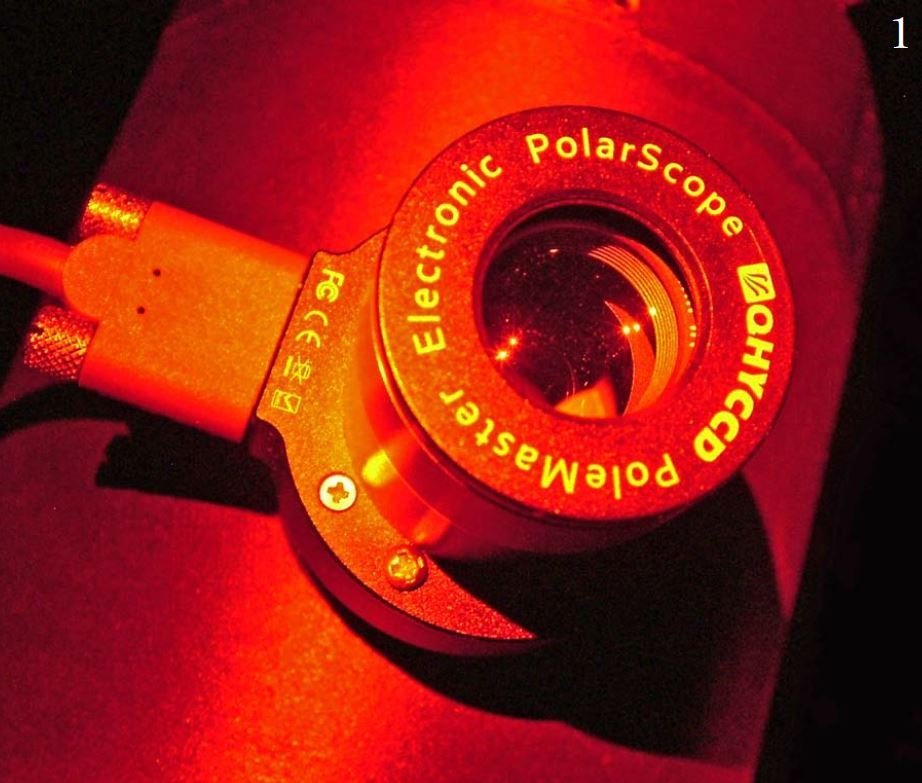
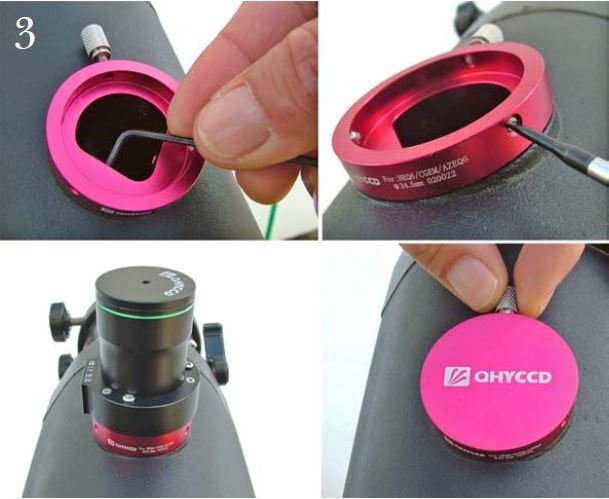
Realmente es una cámara pequeña y muy manejable que debemos adaptar en el hueco AR de la montura por donde entra la luz al buscador polar óptico visual. Es evidente que no todas las monturas tienen el mismo diámetro de agujero. Por este motivo, Lunático proporciona adaptadores para los modelos de las monturas más comúnmente utilizadas en el mundo amateur. Encontramos adaptadores para monturas Sky-Watcher, Orion, Celestron, Takahashi, Losmandy, Vixen e incluso para algún afortunado que disponga de una montura Astro-Physics 900. No tuve problemas en adaptar el Polemaster a mi EQ6 ni en descargar e instalar el citado software.
MANEJO DEL POLEMASTER
Vamos al tema. Fundamental (recordarlo una vez más…) que el trípode se encuentre lo mejor nivelado posible. Un nivel bueno de ferretería es más eficaz que la mayoría de los niveles redondos que traen insertados muchas monturas ecuatoriales.
Clavamos antes un poco las patas para evitar que al colocar el equipo (yo hago la puesta en estación sin el equipo montado) estas no se hundan más en el suelo. Bien. Ponemos la montura y colocamos el Polemaster. La orientación de la cámara es importante tal y como indican las instrucciones. Enchufamos el sistema al ordenador, quitamos la tapa del Polemaster y arrancamos el software.
Hay que pulsar en «conectar» para encender la cámara y comenzar a ver estrellas en el ordenador. Mi primer pensamiento fue «esto está en foco». Así es, no necesité tocar el enfoque del Polemaster ya que las estrellas se veían perfectas. ¿Cuál es la Polar? Las plantillas que usa este programa son muy útiles y no hay pérdida. Apenas tardas unos minutos en familiarizarte con las estrellas de referencia cercanas a la Polar. Una vez la tenemos localizada accedemos a la primera máscara con cinco círculos, además del de la Polar. Debemos girar la máscara con la barra desplazadora denominada «plantilla coincidente». Vamos girando la máscara hasta que cada círculo coincida con una estrella. Si la coincidencia es evidente, tenemos localizada ya con absoluta seguridad a la estrella Polar.
Ahora tocar calcular el centro exacto de giro del eje AR de la montura y su desviación respecto al centro del Polemaster. Hacemos doble clic en una estrella que no esté ni muy cerca ni muy lejos de la Polar y nos disponemos a girar el eje de AR en velocidad rápida hacia donde nos indica la flecha de dirección que aparece en la imagen. El proceso es de dos giros de 40 grados seguidos y confirmándole al software dónde estaba la estrella de referencia y dónde se encuentra ahora que hemos girado la montura. Después del segundo giro nos aparece de nuevo la máscara anterior pero con un círculo discontinuo que gira sobre sí mismo. Hay que alinear de nuevo la máscara y una vez alineada debemos meter la estrella Polar dentro de este círculo discontinuo. Ya tenemos una puesta en estación aproximada con bastante precisión, desde luego. Solo queda aplicar el modo de alta precisión accediendo al «monitoreo» del programa. Es una pequeña ventana con más aumento en la que aparecen un cuadrado verde (indicando el polo norte celeste) y un círculo rojo que nos indica el eje polar de la montura. Hay que hacerlos coincidir. Los movimientos, ya en este caso, deben ser muy finos. Consigues centrarlos y listo, ya tenemos la montura perfectamente puesta en estación… según Polemaster, claro. ¿Lo comprobamos?
PRECISIÓN EN DESPLAZAMIENTOS GOTO
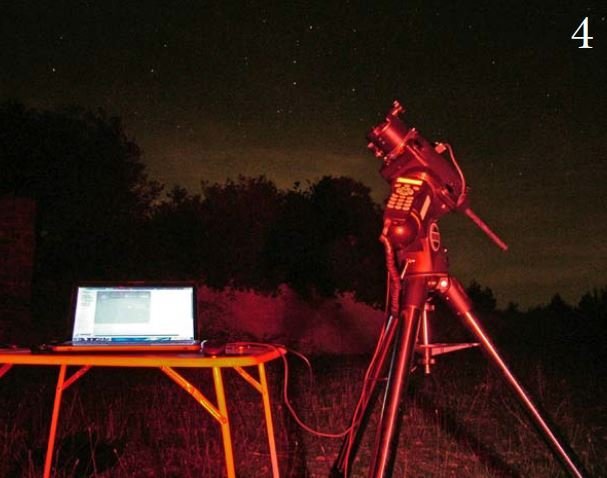
Una de las ventajas de una correcta puesta en estación es la mayor precisión en los GoTos de la montura. En todos los casos usé una alineación con tres estrellas. Si están separadas, cubren ambos hemisferios (este y oeste) y se encuentran no muy lejos del ecuador celeste, serán buenas estrellas para alinear. Utilicé un ED80 con un ocular Eudiascopic de 35 mm, es decir, unos 2,66 grados de campo abarcado. Comencemos el paseo estelar; Denébola (prácticamente en el centro), Cástor (centrada), Capella (prácticamente en el centro), Muscida (prácticamente en el centro), Megrez (prácticamente en el centro), Kochab (centrada), Pollux (centrada), Spica (centrada), Régulo (centrada). El orden de los GoTos fue el mismo que os acabo de describir. Muy buena precisión desde luego ya que, cuando digo «prácticamente en el centro», la separación de la estrella es mínima pero evidente. Aproximadamente de 11′ y 13″ de arco. Este fue el peor valor detectado en los GoTos hechos con la puesta en estación Polemaster.
¿Será igual de preciso el buscador de la Polar óptico de toda la vida? Vamos a verlo. Misma noche, misma nivelación de trípode que la usada para el Polemaster y comprobada la correcta alineación entre el eje óptico del buscador Polar y el eje AR de la montura (la revisé por la mañana con un repetidor de TV lejano). El buscador que monta mi EQ6 es de los clásicos, mostrando a la Osa Mayor y Casiopea como referencias para encontrar el ángulo AR correcto. Movemos este eje y alineamos el cazo de la Osa real del cielo con el del buscador. Lo hacemos con paciencia y mimo. Metemos ahora la Polar en el círculo y listo. Vamos a hacer GoTos. Pues oye, el Polemaster ayuda y mucho. Fue clara una peor precisión en muchos de los destinos GoTos que utilicé. Algunas de las estrellas también las clavaba, pero cuando había desviaciones, estas eran mayores y más frecuentes. El error máximo que detecté fue de 20′ y 13″ de arco. Casi el doble de error (solo en los peores casos) que con el Polemaster.
DERIVAS EN DECLINACIÓN
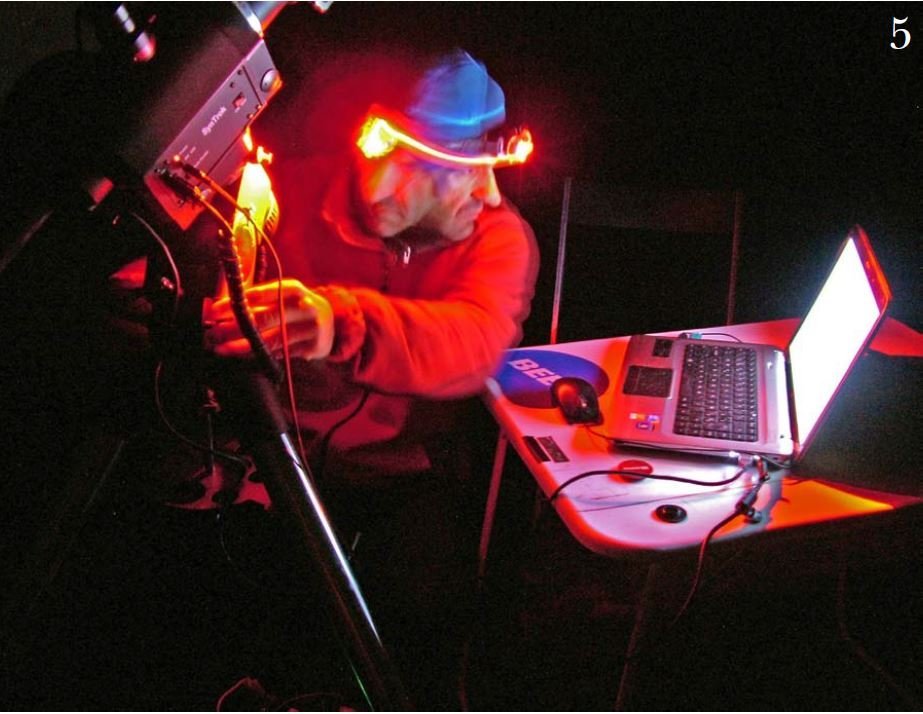
Esto es clave para los astrofotógrafos. Una precisa puesta en estación genera mínimas derivas de la estrella en el eje de declinación, de esta forma, el autoguiado estará más relajado y los resultados serán mejores. Vamos a medir las derivas con y sin Polemaster. Utilicé un ocular reticulado de 9 mm con una Barlow 3X en mi ED80. La amplificación, por tanto, es de 200X. Alineamos el retículo con el sentido de los ejes de la montura, colocamos Spica en el centro, esperamos 30 minutos y a ver qué pasa. Pasado este tiempo compruebo dónde está Spica y oye, en el mismo centro del retículo. No se movió (realmente estaba dónde la dejé), nada de desviación en el eje de DEC.
Eso sí, el error periódico de mi EQ6 me la sacaba del centro en el eje de AR pero, como digo, sin ninguna deriva en DEC. Usando una puesta en estación con el buscador óptico de la Polar, la deriva al cabo de 30 minutos fue muy evidente. En este caso, medí un valor aproximado de 1′ y 12″ de arco de deriva en esos 30 minutos. Sin duda que en fotografía el Polemaster es donde saca todo su potencial.
CONCLUSIÓN
El Polemaster es una excelente herramienta para tener una puesta en estación precisa. Fácil de usar, mejorarás la precisión de los GoTos y sobre todo, de las derivas en declinación. Si eres observador visual no será necesario aunque sí recomendable si te llevas siempre el ordenador al monte. Para los astrofotógrafos, supondrá una mejora importantísima.