
Theo J. A. van Aerts, a fine customer of ours, has been comparing CloudWatcher and TESS-W in order to make an educated choice. He did a very thorough study and was kind enough to share it with us.
Theo adjusted the Darkness Reference Value, which we set to 19.6 by default, to 20.15, which gave him better results.
Keep in mind that this comparison only takes into account SQM values of 12 or more (12 is bright, but not very bright). This is because TESS-W only provides measures from this value, while the CloudWatcher measures very bright scenarios as well as dark ones.
This is the comparison between the CloudWatcher and TESS-W:
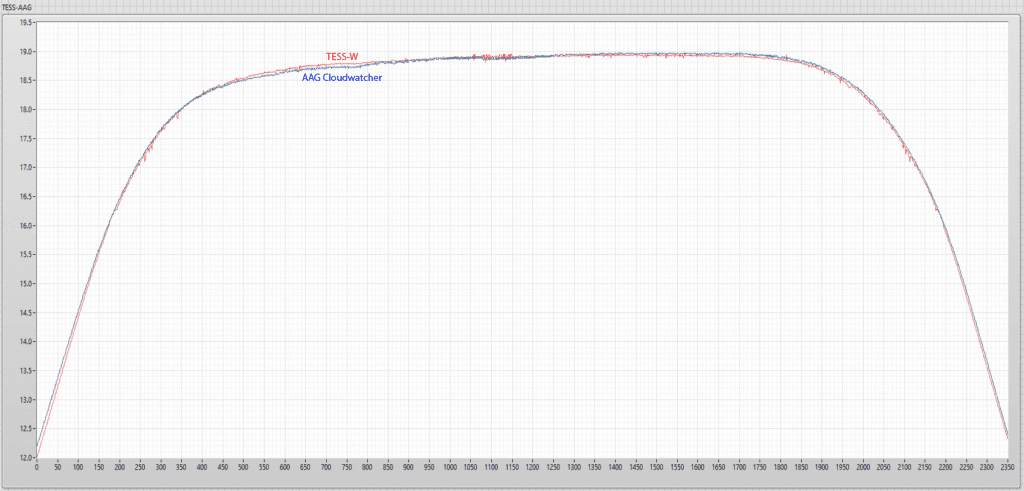
Two difference comparisons
First, the difference between CloudWatcher and TESS-W in the graph above. Note that the difference is never more than 0.2 mpsas and in fact variance is just 0.003:
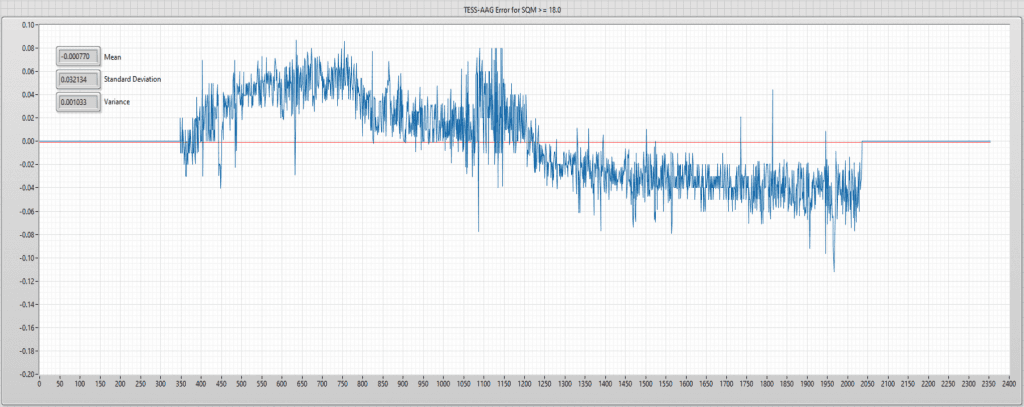
Theo then focused on very dark scenarios (>18 mpsas). The maximum difference is even smaller (never greater than 0.15mpsas) and variance drops to 0.001:
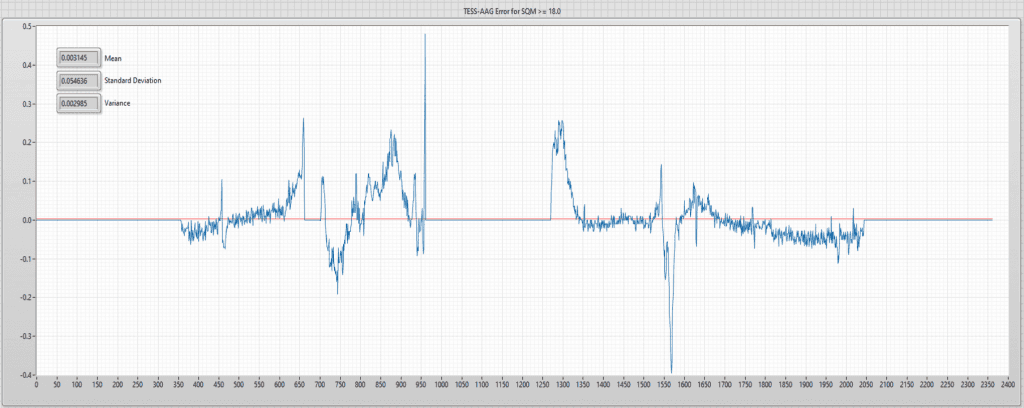
Theo notes several times that CloudWatcher reads more often than TESS-W (we don’t know if this is a limitation of TESS-W itself), so TESS-W has more peaks while CloudWatcher is much smoother.
Quoting some of his final thoughts:
«For the first time I got the real correct results for the comparison of both devices and for me the winner is your AAG Cloudwatcher!
Extremely accurate and all errors and peaks in the plot are mainly caused by the extreme peaks of the TESS-W!
The Cloudwatcher is simply doing a better job and maybe even more accurate than the TESS-W !!??? I don’t know, I guess, but I certainly prefer your device»
Thank you, Theo, for such thorough testing!