
This is a common question we get since the launch of the new Starling.
And the short answer is: no.
Starling and Dragonfly are different products, designed for different needs, and they can work perfectly well together in the same observatory.
The key idea is this:
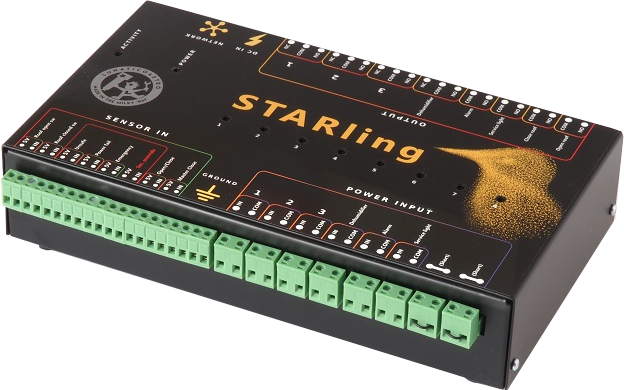
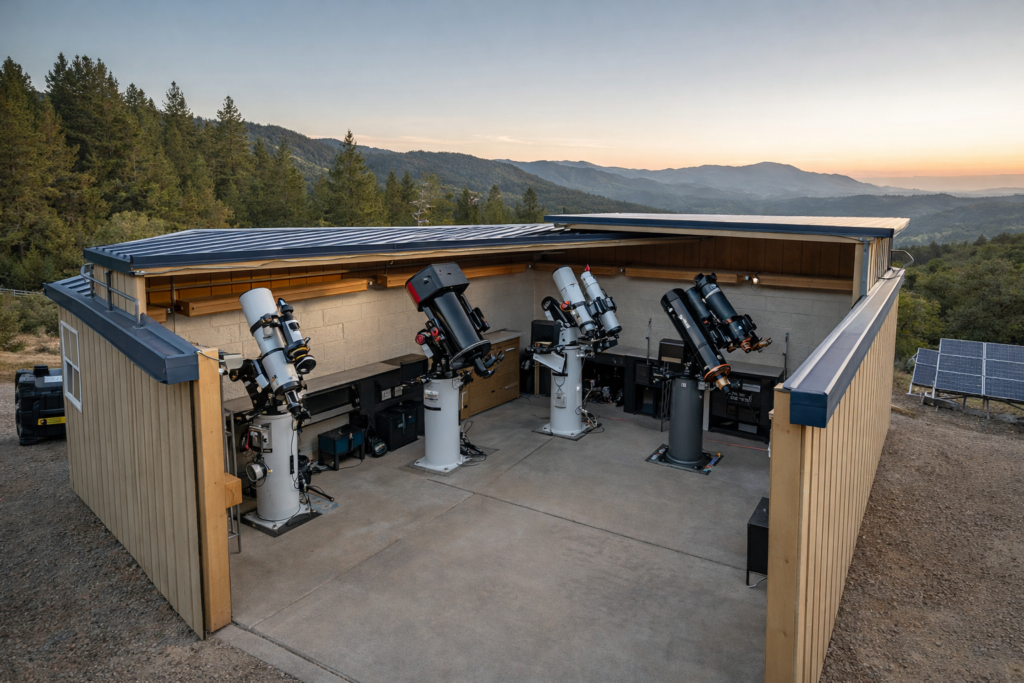
Starling is a specialised controller, focused 100% on opening and closing a roll-off roof safely, in a direct and uncomplicated way — and designed to remain stable and predictable in shared (multi-user) observatories.
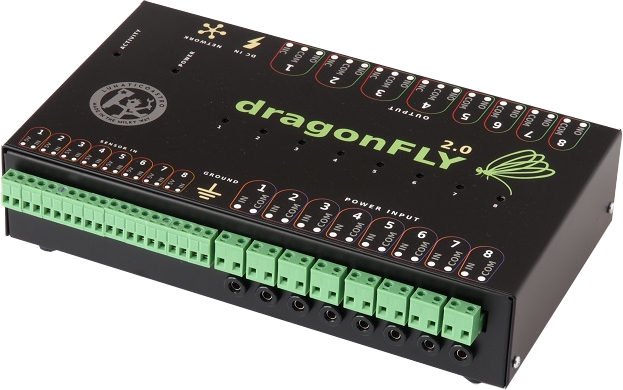
Dragonfly is a multi-purpose controller, the flexible “brain” of the observatory.
Starling was created with one clear purpose:
«to open and close a roll-off roof safely«, and everything revolves around that.
Its goal is not to control “everything”, but to do one thing extremely well:
open and close the roof safely, always.
This makes it the best solution in shared observatories (multi-user), where safety and the stability of roof control are even more important.
It comes ready so the customer doesn’t have to design the system or decide complex connections:
the user connects the roof elements to the predefined relays (service light, alarm and dehumidifier)
and the system works with logic focused 100% on the roof
Starling only leaves:
3 free relays for additional observatory elements
Because Starling is not designed to “control everything”. It is designed so the roof is reliable and safe. In practice, this is a huge advantage when what you want is for the roof to work reliably in a shared environment.
Dragonfly is designed for those who want a powerful, open and adaptable system, capable of controlling many different elements of the observatory, for example::
|
In short: Dragonfly does what you want it to do.
The user decides what to connect, where to connect it, and how to use it.
Also, Dragonfly includes advanced tools such as:
macros
restrictions (to define safety and operating conditions)
And yes: Dragonfly can also open and close a roof, but it does so as part of a more general observatory approach.
everything is designed so it works quickly and safely
ideal for anyone who wants to automate the roof without complications
ideal in shared observatories (multi-user)
ideal for observatories with many devices and automation
perfect if you want a fully customisable solution
safe and flexible when managed by a single user
Starling is designed to work well in environments with multiple users and astronomy software.
Starling “lies” in an intentional and controlled way:
if software requests open/close, Starling reports the request independently of the actual roof state for other users
This helps astronomy programs behave more consistently, and helps the user feel as if they are working “alone” in the observatory.
Dragonfly can open/close, but only under a single user.
Yes. Starling and Dragonfly can work together in the same observatory.
A typical combination would be:
Starling dedicated to the roll-off roof
Dragonfly dedicated to the internal elements of the observatory
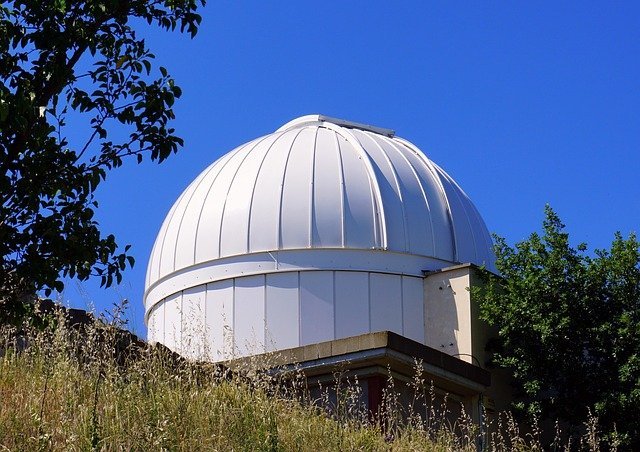
Dragonfly does make sense in a dome, to control the equipment and internal elements of the observatory.
Starling does not make sense in a dome, because it is designed specifically for roll-off roofs.
| Feature | Starling | Dragonfly |
|---|---|---|
| Main focus | Dedicated roll-off roof control | General observatory control |
| Wiring flexibility | Predefined connections (except 3 free relays) | The user decides what to connect and how |
| Control of internal equipment (mount, camera, etc.) | No (only 3 free relays for extras) | Yes |
| Roll-off roof control | Yes (main purpose) | Yes |
| Roof safety | Yes, with logic designed specifically for the roof | Yes, especially in controlled use by a single user |
| Multi-user / multiple programs | Key strength: designed for shared observatories | Possible, but it is not the main focus |
| Macros and restrictions | No | Yes |
| Dome use | No | Yes (for internal equipment) |
Both controllers can operate the roof safely, but Starling stands out especially when the observatory is shared (multi-user).
No. Starling is focused on the roll-off roof (and on multi-user behaviour); Dragonfly is a versatile controller for many observatory elements.
DragonflyDragonfly can open/close, yes, but its main strength is flexibility for controlling the whole observatory.
No. Starling is not designed for domes; Dragonfly can be used in a dome to control the internal elements.
To provide the best experiences, we use technologies such as cookies to store and/or access device information. Consent to these technologies will allow us to process data such as browsing behaviour or unique identifiers on this site. Not consenting or withdrawing consent may negatively affect certain features and functions.